What Is Visceral Fat and Why Should Men Over 40 Care?
You can see subcutaneous fat. It’s the layer you can pinch around your waist, on your arms, under your chin. Most men over 40 who want to lose weight are thinking about this kind of fat, because it’s the kind that shows.
Visceral fat is the one you can’t see. It sits deeper, packed around your internal organs – your liver, pancreas, intestines and kidneys. You can’t pinch it. You can’t spot it in a mirror. But it’s significantly more dangerous than the fat you’re probably worrying about.
After 40, men accumulate visceral fat faster than at any other stage of life. Understanding what it is, why it builds up and what actually reduces it matters more than most general weight loss advice will tell you.
Where Visceral Fat Sits and What It Does
Think of your abdomen as having two layers of fat storage. The outer layer, just beneath the skin, is subcutaneous fat. It’s cosmetically annoying but largely metabolically passive – it stores energy and insulates, and in moderate amounts it doesn’t cause much harm.
The inner layer is visceral fat. It wraps around your abdominal organs inside the peritoneal cavity – the space behind your abdominal wall muscles. You can’t feel it with your hands because it’s beneath the muscle.
What makes visceral fat dangerous is that it behaves differently from subcutaneous fat. It’s metabolically active tissue that functions almost like an endocrine organ. It releases inflammatory molecules called cytokines, produces hormones that disrupt insulin signalling and contributes to a state of chronic low-grade inflammation throughout your body.
This chronic inflammation is linked to type 2 diabetes, cardiovascular disease, fatty liver disease, certain cancers and metabolic syndrome. The research is consistent: visceral fat is one of the strongest independent predictors of disease risk in men, regardless of overall body weight.
You can be at a “normal” weight on the scale and still carry dangerous levels of visceral fat. This is sometimes called “skinny fat” or, more accurately, normal-weight central obesity. The scale tells you very little about what’s happening inside.
Why Men Over 40 Accumulate It Faster
Several factors converge after 40 to make visceral fat accumulation accelerate.
Testosterone declines. After 30, testosterone drops by roughly 1 to 2% per year. Testosterone plays a direct role in regulating where your body stores fat. Higher testosterone favours subcutaneous storage (which is less harmful). Lower testosterone shifts storage toward the visceral compartment. This is a significant reason belly fat gets harder to deal with after 40 – the hormonal environment literally favours deeper fat storage.
Insulin sensitivity decreases. As you age, your cells become less responsive to insulin. When insulin can’t efficiently shuttle glucose into cells for energy, the excess gets converted to fat – and visceral fat cells are particularly responsive to insulin-driven fat storage. A diet high in refined carbohydrates and sugar accelerates this process. If you’ve ever wondered what cutting sugar for even two weeks actually does to your body, improved insulin sensitivity is a major part of the answer.
Cortisol levels tend to increase. Chronic stress, poor sleep and the general pressures that build through your 40s elevate cortisol. Cortisol directly promotes visceral fat deposition – it’s one of the hormones that tells your body to store fat centrally rather than peripherally. Poor sleep is a particularly underrated driver because it raises cortisol and disrupts growth hormone at the same time.
Muscle mass decreases. You lose roughly 3 to 8% of muscle mass per decade after 30, accelerating after 40 if you’re sedentary. Less muscle means a lower resting metabolic rate, which means fewer calories burned at rest, which creates surplus energy that gets stored as fat. When hormonal shifts are already directing fat toward the visceral compartment, losing muscle compounds the problem.
Physical activity typically drops. Career demands, family obligations and general fatigue mean most men move less in their 40s than they did in their 30s. Less movement means less energy expenditure and fewer of the metabolic signals (like AMPK activation from exercise) that help regulate fat storage.
These factors don’t operate in isolation. They reinforce each other. Lower testosterone leads to more visceral fat, which increases inflammation, which worsens insulin resistance, which promotes more visceral fat storage. It’s a cycle, and it accelerates with age unless something interrupts it.
How to Know If You Have Too Much
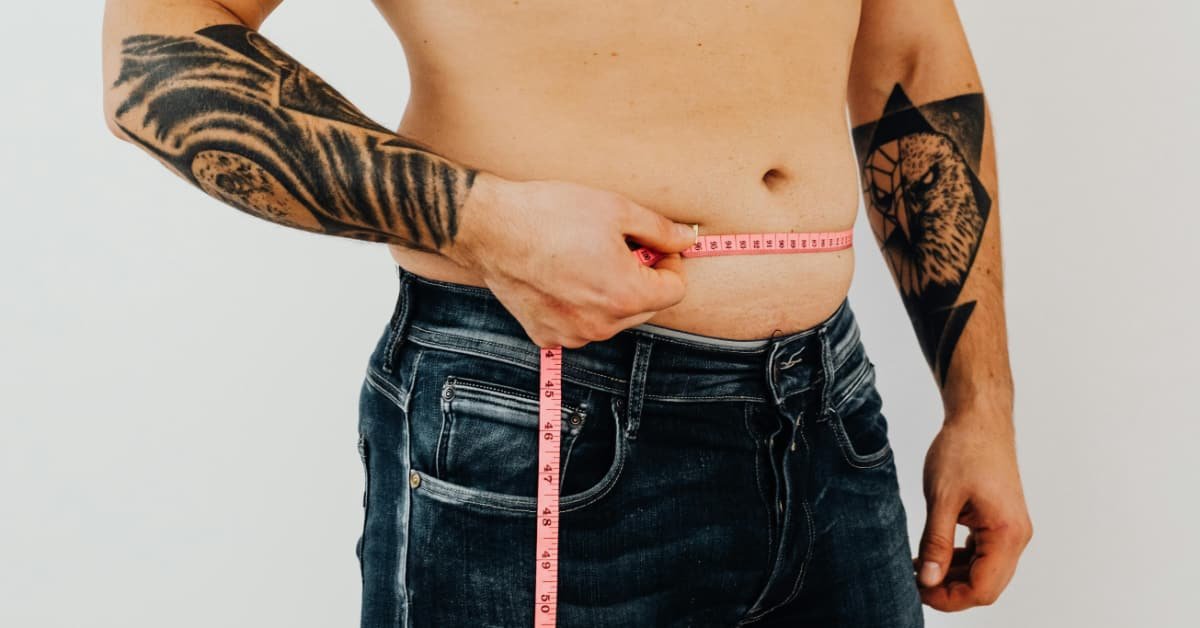
A DEXA scan or MRI can directly measure visceral fat, but these aren’t practical for most people. Fortunately, a simple waist measurement gives you a reliable proxy.
Measure your waist at the navel level, standing relaxed (don’t suck in). Use a standard tape measure, keeping it level all the way around.
For men, a waist circumference above 94 cm (37 inches) indicates increased risk. Above 102 cm (40 inches) indicates substantially increased risk. These thresholds come from WHO and major cardiovascular research guidelines.
The waist-to-height ratio is another useful marker. Divide your waist measurement by your height. A ratio above 0.5 indicates excess central fat. For a man who is 178 cm (5’10”) tall, that means a waist above 89 cm (35 inches) flags concern.
Your waist measurement is a better indicator of visceral fat than your BMI, your weight on the scale or your body fat percentage from a consumer-grade smart scale. If you only track one number, make it this one.
What Reduces Visceral Fat (And What Doesn’t)
Visceral fat responds differently to interventions than subcutaneous fat. This is actually good news – it tends to be the first type of fat your body burns when you create the right conditions.
Moderate calorie deficit. A sustained deficit of 400 to 600 calories per day preferentially reduces visceral fat, especially in the early weeks of a weight loss programme. Research shows visceral fat drops faster than subcutaneous fat during the first months of calorie restriction. Setting a realistic monthly target keeps the deficit sustainable and protects muscle mass.
Walking and moderate-intensity aerobic exercise. Consistent daily walking is one of the most effective visceral fat reducers available. Studies on men over 40 show that 30 to 45 minutes of brisk walking most days of the week significantly reduces visceral fat even when overall weight loss is modest. The key is consistency over intensity – daily walking for months does more than sporadic intense cardio.
Strength training. Resistance exercise reduces visceral fat through two mechanisms: the direct calorie burn of the session and the long-term increase in resting metabolic rate from added muscle mass. Men over 40 who combine regular strength training with walking see greater visceral fat reduction than those who do either alone.
Higher protein intake. Protein has a higher thermic effect than carbohydrates or fat, supports muscle preservation during a calorie deficit and improves insulin sensitivity – all of which work against visceral fat accumulation. Getting enough protein daily (1.6 to 2.2 g per kg of body weight, or roughly 0.7 to 1 g per lb) is one of the most effective nutritional strategies for visceral fat reduction. Building reliable high-protein meals into your week makes hitting that target practical.
Reducing refined carbohydrates and sugar. Visceral fat is particularly responsive to dietary sugar and refined carbs because of the insulin spike they produce. Replacing sugary drinks and processed snacks with whole foods and adequate protein can reduce visceral fat even without a dramatic calorie change, because you’re reducing the insulin surges that drive central fat storage.
Adequate sleep. Men who consistently sleep fewer than six hours a night accumulate visceral fat at a significantly higher rate than those sleeping seven to eight hours. Sleep quality affects cortisol, growth hormone and insulin sensitivity – three hormonal levers that directly control visceral fat storage.
What Doesn’t Work
Spot reduction. Thousands of crunches will strengthen your abdominal muscles but will do absolutely nothing to reduce the visceral fat sitting behind them. Fat loss is systemic – your body decides where to pull fat from based on hormonal signals, and you can’t override that with targeted exercises.
Extreme calorie restriction. Crash diets reduce weight quickly, but a significant portion of that weight is muscle. Less muscle means lower metabolic rate, which means more fat storage when you return to normal eating. And the rebound weight gain tends to deposit preferentially as visceral fat – so aggressive dieting can actually make your visceral fat situation worse than before you started.
Supplements marketed for belly fat. No supplement has been shown in rigorous research to selectively reduce visceral fat. Products marketed as “belly fat burners” or “cortisol blockers” are selling a story that the science doesn’t support.
A Practical Starting Point
If your waist is above 94 cm (37 inches), you have a clear, measurable target. The goal is to bring that number down steadily over three to six months through a combination of approaches.
Walk daily – 30 to 45 minutes at a brisk pace. Add strength training two to three days per week – even bodyweight exercises are enough to start. Eat enough protein spread across three to four meals. Reduce sugar and refined carbs. Prioritise sleep.
You don’t need to do all of this at once. Building one habit at a time and stacking them over months is more effective than an aggressive overhaul that collapses in three weeks.
Measure your waist monthly. The number will move before the scale does in many cases, because visceral fat responds to these interventions faster than subcutaneous fat. That early progress is what keeps you going.
Visceral fat isn’t a cosmetic problem. It’s a health problem that happens to show up around your midsection. Treating it that way – as a health priority rather than a vanity project – changes the approach and the results.
For the full picture on weight loss after 40, read the complete guide.
Frequently Asked Questions
What is the difference between visceral fat and belly fat?
Belly fat is a general term that includes both types of abdominal fat. Subcutaneous belly fat is the soft layer you can pinch beneath the skin. Visceral fat sits deeper, packed around your internal organs behind the abdominal wall. Visceral fat is the more dangerous type because it’s metabolically active and drives inflammation, insulin resistance and disease risk.
Can you have visceral fat if you’re not overweight?
Yes. It’s possible to have a normal BMI or body weight while carrying excess visceral fat around your organs. This is sometimes called normal-weight central obesity. Waist circumference is a more reliable indicator than body weight or BMI for assessing visceral fat risk.
How fast can you lose visceral fat after 40?
Visceral fat typically responds faster than subcutaneous fat to calorie deficit, exercise and dietary changes. Many men over 40 notice measurable reductions in waist circumference within four to eight weeks of consistent daily walking, moderate calorie reduction and improved protein intake. Sustained results require maintaining these habits over months.
This article is for general information only and does not constitute medical advice. If you have a waist circumference above 102 cm (40 inches), a family history of cardiovascular disease or diabetes, or concerns about your metabolic health, consult a healthcare professional for assessment and personalised guidance.