Why You’re Losing Muscle After 40 (And How to Slow It Down)
You probably didn’t notice it at first. Maybe your arms looked a little less defined than they used to. Maybe you struggled to open a jar that wouldn’t have been a problem five years ago. Maybe you caught yourself needing a hand to get off the floor after playing with your kid.
Muscle loss after 40 doesn’t announce itself. It creeps in so gradually that most men don’t realise it’s happening until something small makes them feel older than they thought they were.
The medical term is sarcopenia – the progressive loss of skeletal muscle mass and strength that comes with aging. It starts earlier than most people think, and by the time you notice it, you’ve likely already lost more muscle than you’d expect.
The good news is that this process is not inevitable. Your muscles still respond to the right signals. But you need to understand what’s happening first, because the approach that would have worked at 25 needs adjusting now.
How Much Muscle Are You Actually Losing?
Research shows that the loss of type II muscle fibres – the fast-twitch fibres responsible for power and strength – can begin as early as your mid-20s. But the decline accelerates through your 40s and beyond.
After 40, most men lose somewhere between 3% and 8% of their muscle mass per decade. That might not sound dramatic, but it compounds. By 50, you could have 10-15% less muscle than you had at 35 if you haven’t been doing anything to counter it.
What makes this particularly frustrating is that strength declines even faster than mass. Studies have found that the drop in strength is disproportionate to the amount of muscle lost. You lose function faster than you lose size, which is why everyday tasks can start feeling harder even when you don’t look noticeably different in the mirror.
Why Your Body Stops Building Muscle as Efficiently
At 25, eating a chicken breast and doing some push-ups would trigger a strong muscle-building response. Your body was primed for it. Protein went in, muscle protein synthesis fired up and your muscles grew or maintained themselves with relatively little effort.
After 40, something changes at the cellular level. Scientists call it anabolic resistance – your muscles become less responsive to the signals that used to trigger growth and repair.
In practical terms, this means the same amount of protein that once stimulated robust muscle building now produces a weaker response. Your body needs a larger dose of protein – and a stronger exercise stimulus – to get the same result. Research suggests that while a younger adult might need 20 grams of protein per meal to maximise muscle protein synthesis, men over 40 may need 30 to 40 grams per meal to achieve a similar effect.
This isn’t a failure of willpower or effort. It’s a biological shift that happens to every man. Understanding it helps you adjust your approach instead of wondering why the old methods aren’t working anymore.
The Role Hormones Play
Testosterone is directly involved in muscle maintenance. It promotes protein synthesis, supports the growth of muscle fibres and helps regulate body composition. As testosterone declines – roughly 1 to 2 percent per year from your early 30s – the hormonal environment becomes less favourable for holding onto muscle.
Lower testosterone also tends to increase fat storage, particularly around the midsection. This shift in body composition – less muscle, more belly fat – creates a compounding problem. Fat tissue produces inflammatory compounds that can further impair muscle protein synthesis. So you’re not just losing muscle because of lower testosterone. The fat that replaces it actively makes the muscle loss worse.
Growth hormone follows a similar trajectory. It peaks in your 20s and declines steadily after that. Growth hormone is released primarily during deep sleep, which itself declines after 40. Less deep sleep means less growth hormone, which means less overnight muscle repair. It’s a chain reaction that quietly undermines your muscle mass from multiple angles.
Cortisol adds another layer. Chronic stress keeps cortisol elevated, and cortisol is catabolic – it breaks down muscle tissue for energy. If you’re in a high-stress job, sleeping poorly and not exercising, your hormonal environment is actively working against muscle preservation.
What Speeds Up Muscle Loss
Some of the muscle loss after 40 is biological and unavoidable. But a significant portion is driven by lifestyle factors that you can control.
Inactivity is the biggest accelerator. Muscles operate on a use-it-or-lose-it basis. If you’re not giving your muscles a reason to stay, your body will gradually dismantle them. Sitting at a desk for 10 hours a day sends a clear signal to your body that large, metabolically expensive muscles aren’t needed.
Under-eating protein starves your muscles of the raw material they need. Many men over 40 eat the same way they did in their 30s without realising that their protein needs have actually gone up due to anabolic resistance. The gap between what you eat and what your muscles need widens silently.
Poor sleep disrupts growth hormone release and impairs overnight recovery. If your muscles can’t repair properly at night, the net effect is a gradual decline even if you’re training during the day.
Crash dieting is particularly destructive. When you cut calories aggressively, your body doesn’t just burn fat. It breaks down muscle for energy, especially if protein intake is inadequate. Men who yo-yo diet through their 40s often end up with less muscle and more fat than when they started.
Excessive cardio without strength training can contribute to muscle loss over time. Long-duration cardio burns calories, but it doesn’t provide the mechanical stimulus your muscles need to maintain their mass. This doesn’t mean walking is bad – far from it. It means walking alone, without any form of resistance training, may not be enough to prevent muscle loss.
How to Slow It Down
The process is reversible. Your muscles don’t stop responding to training after 40. They just need the right kind of stimulus, the right fuel and enough recovery time.
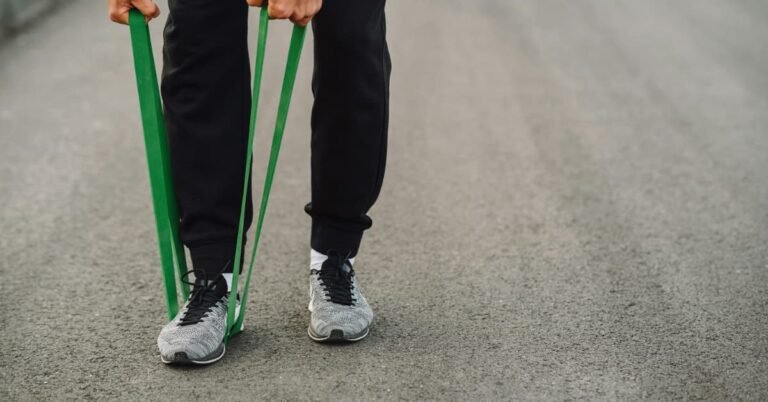
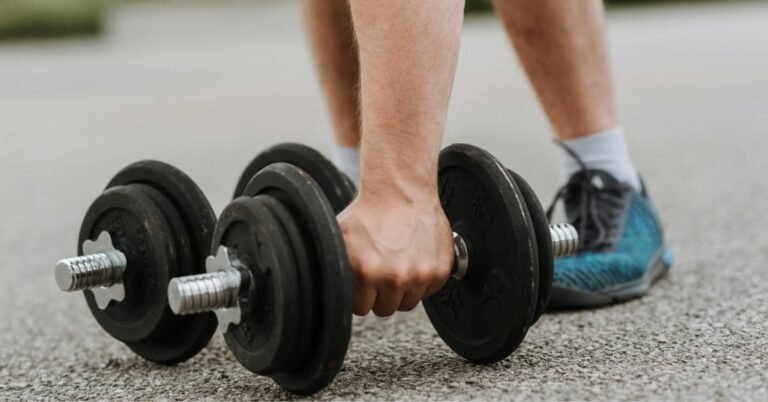
Resistance training is non-negotiable. This is the most effective tool you have. It doesn’t need to be heavy barbell work. Bodyweight exercises, dumbbells, resistance bands – any form of progressive resistance that challenges your muscles will stimulate protein synthesis and counter sarcopenia.
Two to three sessions per week targeting all major muscle groups is the minimum effective dose. The key is consistency over intensity. Showing up regularly with moderate effort produces better long-term results than sporadic intense sessions that leave you injured or burned out.
If you haven’t started, here’s what I wish I’d known when I began.
Increase your protein intake. Due to anabolic resistance, you need more protein than you did at 25 to get the same muscle-preserving effect. Research suggests 1.2 to 1.6 grams per kilogram of body weight per day, spread across three meals rather than loaded into dinner.
Leucine – an amino acid found in high concentrations in eggs, dairy, meat and fish – is particularly important for triggering muscle protein synthesis. Making sure each meal contains a leucine-rich protein source gives your muscles the strongest possible signal to maintain themselves.
Prioritise sleep. Growth hormone release during deep sleep is one of your body’s primary muscle repair mechanisms. Improving your sleep quality directly supports muscle preservation. A consistent bedtime, reduced caffeine after noon and a cool, dark bedroom are simple changes that compound over time.
Manage your stress. Chronic cortisol elevation breaks down muscle. You don’t need meditation retreats or radical lifestyle changes. Even a daily 30-minute walk can lower cortisol significantly. Finding one reliable stress-reduction habit and doing it consistently matters more than occasional grand gestures.
Don’t crash diet. If you’re trying to lose fat, do it slowly – aim for no more than 0.5 to 1 kilogram per week. Keep protein high throughout the process. A moderate calorie deficit with adequate protein preserves muscle while still allowing fat loss. An aggressive deficit sacrifices muscle along with fat.
What Results to Expect
If you start resistance training and increase your protein intake, you’ll notice changes – but they’ll show up as function before they show up as appearance.
In the first few weeks, you’ll feel stronger. Getting off the floor, carrying heavy bags, climbing stairs – these get easier before anything changes in the mirror. This is your nervous system adapting to the new stimulus.
By months two to three, you’ll start noticing subtle changes in definition, particularly in your arms and shoulders. Shirts may fit differently around the chest. Your posture may improve as your upper back muscles strengthen.
By months four to six, the changes become more visible and the functional improvements become significant. The muscle you’ve built is now actively supporting your metabolism, your joints, your energy levels and your ability to move through daily life with less effort.
This isn’t a fast process. But it’s a reliable one. And unlike most things that promise transformation after 40, this one actually delivers if you stay with it.
For the full picture on strength training after 40, read the complete guide.
Frequently Asked Questions
At what age do men start losing muscle?
Loss of type II muscle fibres can begin as early as your mid-20s but accelerates noticeably through your 40s. Most men lose 3-8% of muscle mass per decade after 40.
Can you rebuild muscle after 40?
Yes. Your muscles still respond to resistance training and adequate protein. Two to three strength sessions per week with 1.2 to 1.6 grams of protein per kg of body weight can slow and even reverse muscle loss.
Does walking prevent muscle loss after 40?
Walking supports overall health and reduces cortisol but doesn’t provide enough resistance stimulus to prevent muscle loss on its own. Combining walking with strength training is the most effective approach.
This article is for general information only. If you’re experiencing significant or rapid loss of strength or muscle mass, consult a healthcare professional to rule out underlying conditions.