How Much Water Should You Actually Drink After 40?
The standard advice is eight glasses a day. You’ve probably heard it a hundred times. The problem is, that number was never based on strong evidence, and after 40 your hydration needs shift in ways that a generic rule doesn’t account for.
You need more water than you think. And you’re probably getting less than you realize.
The Baseline: What the Evidence Actually Says
The commonly cited “8 glasses” (roughly 2 litres / 64 oz) originated from a 1945 US Food and Nutrition Board recommendation that included water from all sources – food, drinks, everything. Somewhere along the way, it got simplified into “drink 8 glasses of water” and stuck.
Current research points to a more useful range. For adult men, total daily water intake from all sources should be approximately 3 to 3.7 litres (100 to 125 oz). That includes water from food (which typically accounts for about 20% of your intake) and other beverages.
In practical terms, that means drinking roughly 2.5 to 3 litres (85 to 100 oz) of actual fluids per day. For men over 40, this baseline often needs to be higher depending on activity level, climate and body composition.
Why Your Hydration Needs Change After 40
Several things shift as you age that make dehydration both more likely and more consequential.
Your thirst signal weakens. This is the big one. Research consistently shows that the thirst mechanism becomes less sensitive with age. By 40, you can be mildly dehydrated and not feel thirsty at all. Relying on thirst as your cue to drink – which works reasonably well at 25 – becomes unreliable.
Kidney function gradually declines. Your kidneys become less efficient at concentrating urine and retaining water. You lose more water through urination per litre consumed than you did a decade ago. This means the same intake produces less net hydration.
Body composition changes. Muscle tissue holds significantly more water than fat tissue. After 40, as muscle mass decreases and body fat tends to increase, your body’s total water reservoir shrinks. You have less stored water to draw from during gaps in intake.
Medication effects. Blood pressure medications, diuretics and certain other prescriptions common in men over 40 increase water loss. If you’re on any long-term medication, it’s worth checking whether increased fluid intake is recommended.
These changes don’t make dehydration inevitable. They make it easier to slip into without noticing. And mild chronic dehydration – the kind where you’re not acutely thirsty but consistently under-hydrated – has real effects on how you feel and function.
What Mild Dehydration Actually Does to You
You don’t need to be severely dehydrated to feel the effects. A fluid deficit of just 1 to 2% of body weight – which for an 80 kg (176 lbs) man means losing roughly 0.8 to 1.6 litres more than you’re taking in – produces measurable changes.
Cognitive function drops. Concentration, short-term memory and reaction time all decline with mild dehydration. If you’ve noticed afternoon brain fog or difficulty focusing, inadequate water intake is one of the simpler explanations to rule out. It ties into the broader energy management challenge after 40 – sometimes the fix is simpler than you’d expect.
Physical performance declines. Dehydrated muscles produce less force and fatigue faster. If your walking pace feels harder than usual or your strength sessions feel sluggish, check your water intake before assuming you need more rest.
Joint stiffness increases. Synovial fluid – the lubricant inside your joints – is largely water. When you’re under-hydrated, joint movement becomes less smooth. For men over 40 who already deal with joint stiffness, dehydration makes it measurably worse.
Digestion slows. Water is essential for moving food through your digestive system. Chronic mild dehydration is one of the most common and most overlooked causes of constipation in men over 40.
Sleep quality can suffer. Dehydration increases the concentration of waste products in your blood and can cause nocturnal leg cramps, both of which disrupt sleep. If your sleep already feels different after 40, poor hydration during the day can compound the problem.
A Practical Hydration Framework
Forget counting exact glasses. Instead, build a system that makes adequate intake automatic.
Start your day with water. You wake up after 7 to 8 hours without drinking anything. Your body is at its most dehydrated point of the day. Drinking 500 ml (17 oz) of water before your morning coffee or breakfast rehydrates you at the point where it matters most. Make this a habit that’s easy to stick with – keep a glass or bottle by your bed.
Drink before and during walks. If you’re walking daily, drink 250 to 500 ml (8 to 17 oz) before heading out, especially in warm weather. For walks over 45 minutes, carry water and sip throughout. The combination of exercise and heat can cause significant fluid loss through sweat that you won’t fully register through thirst alone.
Front-load your intake. Aim to drink the majority of your daily water between waking up and late afternoon. Tapering off in the evening reduces the chance of disrupted sleep from bathroom trips – a practical consideration that becomes more relevant after 40.
Use meals as hydration checkpoints. Drinking a glass of water with every meal and snack adds 3 to 4 glasses per day without any dedicated effort. Pair this with the morning glass and water around exercise and you’re close to your target before you’ve had to think about it.
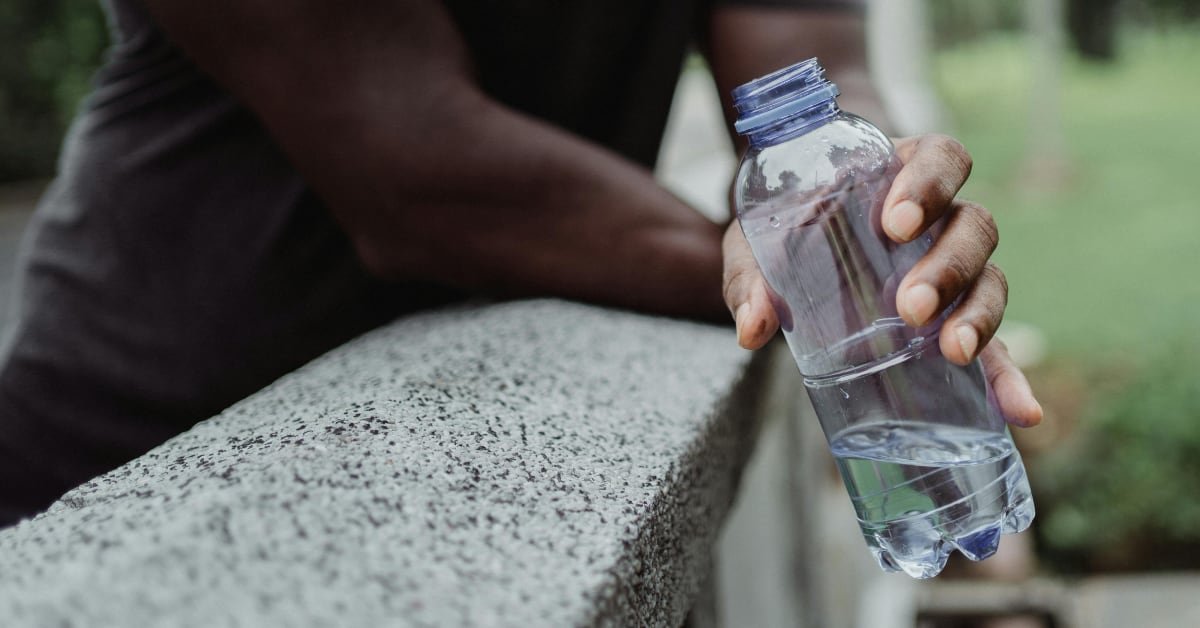
Keep a bottle visible. This sounds basic, but environmental cues drive behaviour. A water bottle on your desk, in your car or in your bag consistently increases intake in studies on hydration behaviour. Out of sight, out of mind applies literally to water consumption.
How to Tell If You’re Drinking Enough
The simplest and most reliable indicator is urine colour. Pale yellow (like light straw) indicates adequate hydration. Dark yellow or amber means you need more water. Clear and colourless means you’re overdoing it slightly, though this is rarely a health concern.
Check this two or three times during the day – morning, midday and afternoon. If it’s consistently pale, your intake is on track. If it’s dark by midday, you’re behind.
Other useful signals include headaches that appear in the afternoon without an obvious cause, persistent low-level fatigue that improves after drinking water, dry mouth or lips and reduced urination frequency (fewer than four to six times per day can indicate under-hydration).
What Counts (And What Doesn’t Help as Much)
Water is the baseline. Plain water is the most efficient hydrating fluid. It requires no processing and has no caloric cost or diuretic effect.
Tea and coffee count. Despite the old advice that caffeine dehydrates you, research shows that moderate coffee and tea consumption (3 to 4 cups per day) has a net hydrating effect. The water in the drink outweighs the mild diuretic effect of caffeine. That said, caffeine late in the day can disrupt sleep, so factor in timing.
Fruits and vegetables contribute. Foods with high water content – cucumbers, watermelon, oranges, lettuce, tomatoes – add meaningful hydration. A diet rich in whole foods naturally supplements your fluid intake.
Sugary drinks and alcohol are poor hydrators. Soft drinks, fruit juices and energy drinks add calories and sugar without any hydration advantage over water. Alcohol is a net dehydrator – it suppresses the hormone (ADH) that tells your kidneys to retain water, causing you to lose more fluid than you take in. If you drink alcohol, match each serving with a glass of water.
Can You Drink Too Much?
Technically, yes. Overhydration (hyponatraemia) occurs when you drink so much water that your blood sodium levels drop dangerously low. In practice, this is extremely rare in everyday life and primarily a risk during prolonged endurance exercise where large volumes of water are consumed without electrolyte replacement.
For most men over 40 going about normal daily life and moderate exercise, the risk of drinking too much is far lower than the risk of drinking too little. If your daily intake stays between 2.5 and 4 litres (85 to 135 oz), you’re in a safe and effective range.
Making It Automatic
Hydration works best when it requires zero willpower. Glass of water when you wake up. Water with every meal. A bottle during your daily walk. Taper off in the evening.
That structure alone gets most men over 40 to an adequate daily intake without counting ounces or setting reminders. Your body runs better when it’s properly hydrated – your joints move more freely, your energy holds steadier, your brain works sharper and your recovery improves. All from the simplest, cheapest health intervention available.
For the full picture on nutrition after 40, read the complete guide.
Frequently Asked Questions
Is 2 litres of water a day enough for men over 40?
For most men over 40, 2 litres (64 oz) of water alone is on the low side. Aiming for 2.5 to 3 litres (85 to 100 oz) of total fluids daily, adjusted upward for exercise and warm weather, is a more evidence-based target.
Does coffee dehydrate you after 40?
Moderate coffee intake (3 to 4 cups daily) has a net hydrating effect because the water content outweighs caffeine’s mild diuretic action. It counts toward your daily fluid intake.
How do you know if you’re dehydrated after 40?
Pale yellow urine indicates adequate hydration. Dark yellow or amber means you need more water. Afternoon headaches, persistent low-level fatigue and dry mouth are also common signs.
This article is for general information only and does not constitute medical advice. If you have kidney disease, heart conditions or are on medications that affect fluid balance, consult a healthcare professional for personalised hydration guidance.