I Started Strength Training at 40. Here’s What I Wish I Knew
I kept putting it off.
Not because I didn’t know strength training was important. I read enough articles and watched enough videos to understand that muscles shrink after 40, that metabolism slows down and that lifting weights could help. The information was never the problem.
The problem was that I kept waiting for the right time to start. I told myself I’d begin once I had a proper home gym set up. A good bench, a full dumbbell rack, maybe a cable machine. I spent weeks researching equipment, comparing brands and reading reviews. Meanwhile, my body wasn’t getting any younger.
One morning I woke up feeling stiff in places that never used to bother me. My shoulders ached from sleeping wrong. My lower back tightened up just from sitting at my desk. I was 42 and I felt like I was slowly rusting from the inside.
That week I ordered a basic pair of adjustable dumbbells and a set of resistance bands. Total cost was less than what I’d been budgeting for that “perfect” home gym. And I finally started.
Looking back, I wish someone had told me a few things before I began. Not the typical gym advice written for younger guys. But the stuff that actually matters when you’re starting strength training in your 40s with a job, a family and limited time.
Your Body Has Changed. Accept That First.
The body you have at 40 is not the body you had at 25. That sounds obvious, but it matters more than you think when you pick up weights for the first time in years.
Research shows that muscle loss can begin as early as your 30s and accelerates through your 40s. One study found that muscle strength declines anywhere from 16% to 40% when comparing people under 40 to those over 40. Scientists call this sarcopenia – the gradual loss of skeletal muscle mass and strength that comes with aging.
But the encouraging part is that strength training can slow and even reverse this process. Your muscles still respond to resistance. They still grow. They just need a different approach than what worked two decades ago.
The first thing I had to accept was that I wasn’t going to train like I was 25. And honestly, that turned out to be a good thing.
I Didn’t Need a Perfect Setup
This was my biggest mistake before I even touched a weight. I convinced myself that I needed a fully equipped home gym to train properly. A squat rack, a bench press, a pull-up bar, a full set of plates. The research phase alone took months.
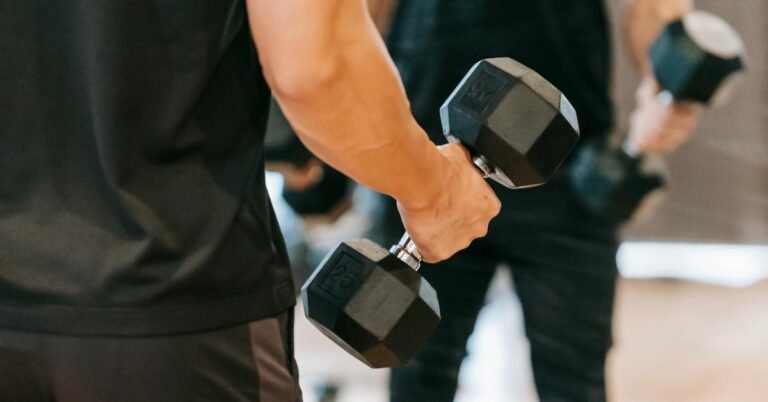
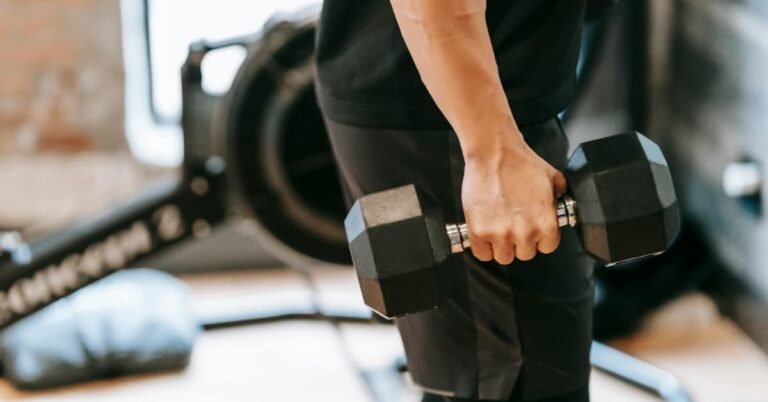
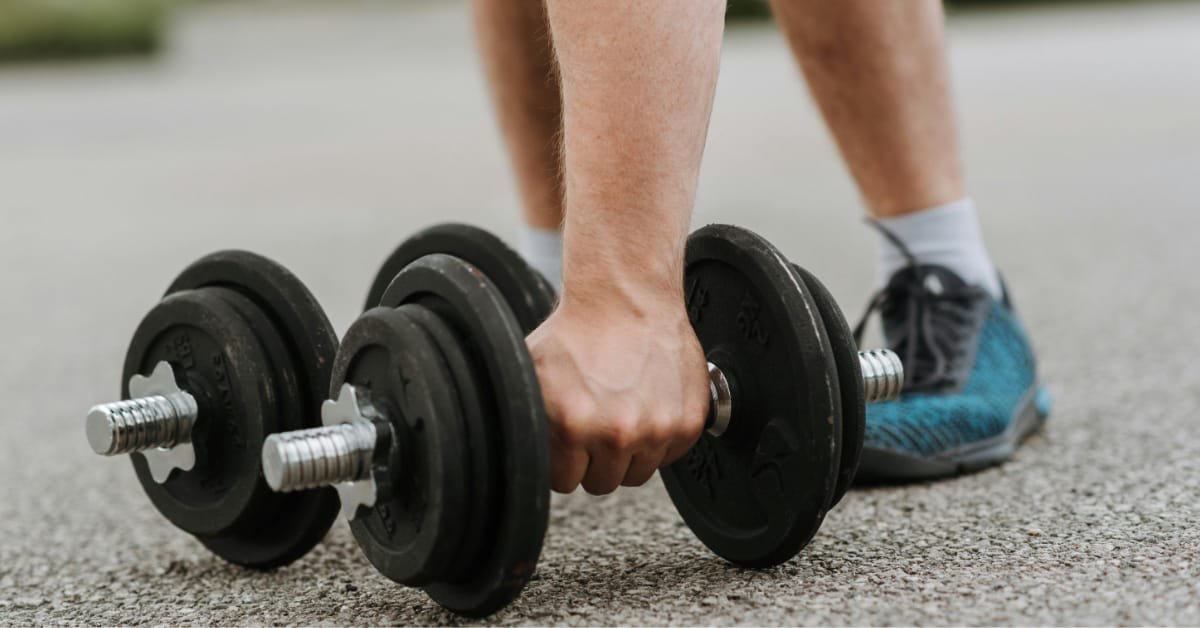
What I actually needed was a pair of dumbbells and some floor space.
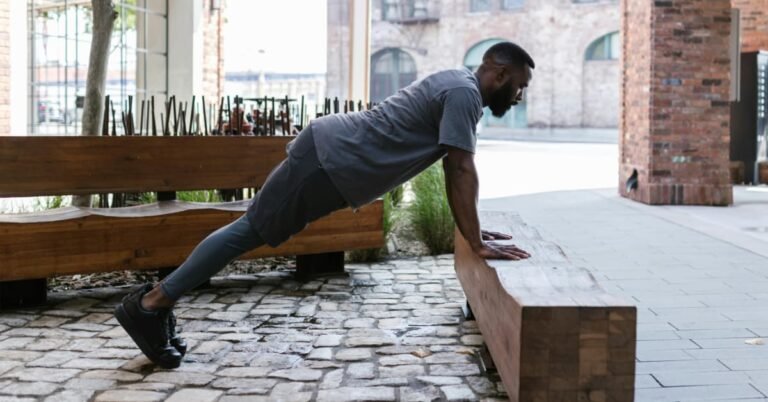
My first few weeks of training involved goblet squats, dumbbell rows, overhead presses, push-ups and resistance band pull-aparts. Nothing fancy. No complex equipment. I trained in my living room in the gap between my couch and the TV stand.
It wasn’t pretty, but it worked. My shoulders started feeling less stiff. Getting up from the floor stopped being a project. I had more energy by the end of the workday instead of less.
If you’re reading this and you’re still in the “researching equipment” phase, stop. Get a pair of dumbbells or a set of resistance bands and start this week. You can upgrade later once training becomes part of your routine.
Starting Slow Felt Frustrating but It Was the Right Call
My first instinct was to push hard. I wanted to feel like I was making up for lost time. So in my first week I did too much, lifted too heavy and woke up the next morning feeling like I’d been hit by something.
The soreness lasted almost four days. I could barely raise my arms to wash my hair. My knees complained going down stairs. And I didn’t touch the dumbbells again for over a week because I was too sore and too discouraged.
When I restarted, I dropped the weight significantly. I focused on doing each movement slowly and with control. Two sessions a week, about 25 minutes each. That felt almost too easy at first, but something important happened – I stayed consistent.
After about three weeks of showing up regularly at a lighter load, I started adding small amounts of weight. No dramatic jumps. Just enough to feel challenged without being wrecked the next day.
This is probably the single most important lesson I learned. After 40, your recovery is slower. Pushing to complete exhaustion in every session doesn’t build muscle faster. It just makes you too sore or too injured to show up next time. Consistency matters far more than intensity at this stage.
The Warm-Up Stopped Being Optional
In my 20s I never warmed up. I’d walk into a gym, grab a barbell and start lifting. Nothing bad happened because my body could absorb that kind of carelessness.
At 40, skipping the warm-up was a direct path to a pulled muscle or a cranky joint.
I started spending 5 to 10 minutes before each session doing basic movements. Arm circles, bodyweight squats, hip hinges, some light band work. Nothing that would make for an exciting workout video, but it made a noticeable difference. My joints felt smoother. My muscles responded better. And the nagging shoulder pain I had for months started to ease up.
If you’re over 40 and strength training without warming up, you’re borrowing time. Eventually something will remind you that your body needs a few minutes to get ready before you load it.
Finding Time Was About Lowering the Bar
I work full days. I have responsibilities at home. Finding an hour to train was unrealistic most days. And that’s exactly what kept me from starting for so long – I assumed strength training required a serious time commitment.
It doesn’t.
My current routine is three sessions a week, roughly 30 minutes each. Some weeks it drops to two sessions when life gets busy. I train at home before dinner, usually while something is cooking in the kitchen. No commute to a gym. No waiting for equipment. No elaborate routine.
The key was lowering the bar for what “counts” as a workout. A 20-minute session with dumbbells counts. A 15-minute resistance band circuit counts. A single set of push-ups and squats on a day when everything else falls apart still counts more than doing nothing.
Once I stopped treating strength training like a big event that required special time and preparation, it became just another thing I did in my day. Like brushing my teeth, but with more grunting.
What Actually Changed After a Few Months
I want to be honest about this – I didn’t suddenly look like a different person. The mirror changes were subtle, especially in the first two months.
But the changes I felt were real and they showed up faster than I expected.
Within about three weeks, I noticed that I had more energy in the afternoons. The post-lunch slump that had become part of my daily routine started getting shorter. I fell asleep faster at night. My lower back stopped complaining after long desk sessions.
By month two, I could carry groceries up the stairs without needing to pause. I could play with my kid for longer without getting winded. Getting off the floor went from a multi-step process back to a single, smooth movement.
By month three, I started noticing definition in my arms and shoulders (I used to carry a lifelong sadness about my thin arms). My shirts fit better around the chest. I felt sturdier.
None of this was dramatic. But all of it was real and all of it made my daily life tangibly better.
A Simple Starter Routine That Works
If you’re starting from zero, you don’t need a complicated program. You need a handful of compound movements that work multiple muscles at once.
This is close to what I started with:
Session A
- Goblet squats (dumbbells) – 3 sets of 10
- Dumbbell rows – 3 sets of 10 per side
- Push-ups (knees if needed) – 3 sets of as many as you can do with good form
- Resistance band pull-aparts – 2 sets of 15
Session B
- Romanian deadlifts (dumbbells) – 3 sets of 10
- Overhead press (dumbbells) – 3 sets of 8
- Bodyweight lunges – 3 sets of 8 per leg
- Plank hold – 2 sets of 20 to 30 seconds
Alternate between A and B. Start with two sessions a week. Add a third when it feels manageable. Rest at least one day between sessions.
The weight should feel challenging by the last two reps but not so heavy that your form falls apart. When you can complete all sets and reps with good form, increase the weight slightly.
That’s it. No need to make it more complicated than this for the first couple of months.
What I’d Tell a Friend Who’s Thinking About Starting
Don’t wait for the perfect setup. Don’t wait for January. Don’t wait until you’ve lost some weight first or until work slows down. Those are all just versions of the same delay I fell into.
Your muscles are quietly losing mass and strength right now. That’s not meant to scare you. It’s just biology. But the good news is that your muscles also respond quickly to resistance, even at 42 or 45 or 50. You don’t need to train like an athlete. You just need to start loading your body with some form of resistance on a regular basis.
Start lighter than you think you should. Show up more often than you think matters. And give yourself permission to do a short and imperfect workout instead of skipping a long and perfect one.
I wish I’d started two years earlier. But I’m glad I didn’t wait another two.
For the full picture on strength training after 40, read the complete guide.
This article is based on personal experience and general fitness information. If you have existing injuries or health conditions, talk to a doctor before starting a new exercise program.