Strength Training After 40 – The Complete Guide
Strength training after 40 is one of the most valuable things you can do for your body. It protects your joints, supports your metabolism, maintains bone density and keeps everyday movement feeling easy rather than effortful. The problem is that most strength training advice is written for men in their 20s, and applying it directly after 40 leads to frustration, injury or both.
Your body at 40 is not your body at 25. Muscle doesn’t build as quickly. Recovery takes longer. Tendons and ligaments are less elastic. Hormonal shifts mean the same effort produces different results. But the adaptation still happens. Men in their 40s, 50s and beyond can build meaningful strength and muscle when they train in a way that accounts for how their body has changed.
This guide covers everything you need to know about strength training after 40, from understanding why muscle loss happens to choosing the right equipment, frequency and approach to building a sustainable routine that delivers results without breaking you down.
Why you’re losing muscle (and why it matters)
After 30, you lose roughly 3-5% of your muscle mass per decade. After 40, the rate accelerates, particularly in fast-twitch muscle fibres responsible for power and explosive movement. This process, called sarcopenia, is gradual enough that most men don’t notice it year to year. They just notice that things feel heavier, slower and more tiring than they used to.
The consequences go beyond aesthetics. Muscle is metabolically active tissue. Less muscle means a lower resting metabolic rate, which means your body burns fewer calories at rest. It also means weaker support structures around your joints, increasing the risk of injury during even low-intensity activities. Understanding why muscle loss happens and what accelerates it is the foundation for knowing how to fight back against it.
The encouraging part is that muscle responds to resistance training at any age. The process is slower than it was in your 20s, but the adaptation is real and measurable. You’re not maintaining a declining asset. You’re actively rebuilding one.
Getting started (or restarting after years away)
If you haven’t touched a weight in years, or if you’ve never strength trained at all, the starting point matters more than the programme.
The biggest mistake men over 40 make is starting where they think they should be rather than where they actually are. Ego loading, skipping progressions and jumping into advanced routines leads to injury, soreness that lasts a week and a quick return to the couch. The men who succeed long-term are the ones who start conservatively and build gradually.
If the idea of a gym feels intimidating or impractical, that’s fine. You don’t need one. Bodyweight exercises provide enough resistance to build meaningful strength, especially when you’re starting from a low base. Push-ups, squats, lunges, planks and rows using a table edge or doorframe are legitimate strength work. They also teach movement patterns and body awareness that protect you when you eventually add external load.
The lessons learned by men who started strength training in their 40s are remarkably consistent: start lighter than you think you need to, prioritise form over weight and give yourself permission to progress slowly. The first month isn’t about building muscle. It’s about building the habit and preparing your connective tissue for what’s coming.
Choosing your equipment
You don’t need a full gym to train effectively after 40. The right equipment depends on your experience, your space and what you’ll actually use consistently.
Bodyweight. Requires nothing. Effective for beginners and intermediate lifters. Limitations emerge once you need more resistance for lower body work, but upper body and core can be trained thoroughly with bodyweight alone.
Resistance bands. Portable, joint-friendly and surprisingly versatile. Bands provide variable resistance (harder at the top of the movement, easier at the bottom), which is actually more natural for your joints than fixed weights. If you’ve been curious about whether bands can deliver real results, the short answer is yes, particularly for men over 40 who need a lower-impact option.
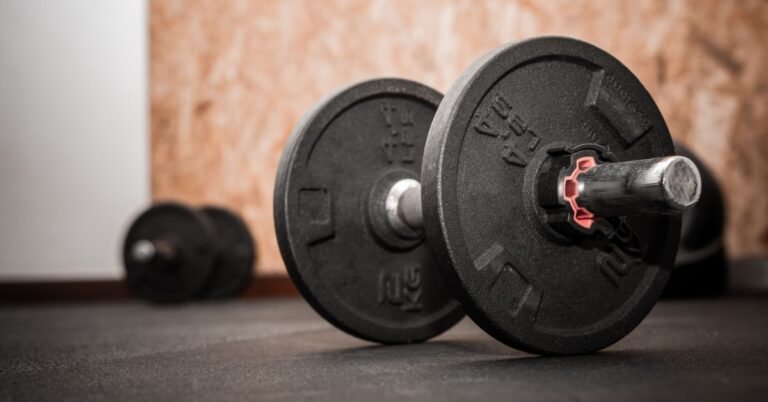
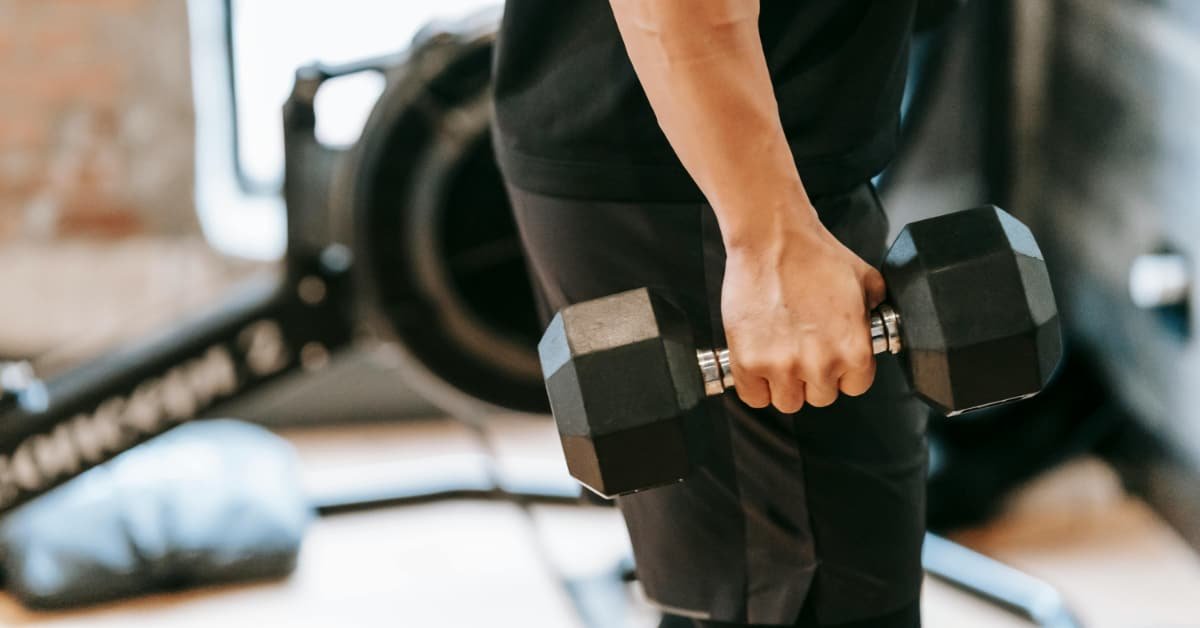
Dumbbells. The most practical free weight for home training. An adjustable set covers a wide range of exercises. Dumbbells also force each side of your body to work independently, which corrects strength imbalances that develop over years of daily life.
Barbell. The most efficient tool for heavy compound lifts (squats, deadlifts, bench press, overhead press). Requires more space, more investment and more technical knowledge. Best suited for men with some training experience or access to a gym.
Machines. Provide guided movement paths, which reduces injury risk and makes it easier to isolate specific muscles. Useful for older beginners or for supplementing free weight work. Available at most commercial gyms.
The best equipment is what you’ll use three times a week for the next year. A set of resistance bands used consistently will produce better results than a home gym that collects dust.
How often to train
Training frequency is one of the most common questions men over 40 ask, and the answer depends on your recovery capacity as much as your ambition.
For most men over 40, three sessions per week is the practical sweet spot. It provides enough stimulus for muscle growth and strength gains while leaving adequate recovery time between sessions. Two sessions per week still produces meaningful results, particularly for beginners. Four or more sessions can work but requires careful programming and attention to recovery.
The key principle is that you don’t get stronger during the workout. You get stronger during the recovery between workouts. After 40, that recovery window is longer than it was in your 20s. Training too frequently without adequate rest leads to accumulated fatigue, joint irritation and stalled progress.
A simple structure that works for three sessions per week: one upper body day, one lower body day and one full body day. Or three full body sessions with different exercises each day. Either approach ensures each muscle group gets trained with enough frequency while getting 48-72 hours of recovery between sessions.
The role of stretching and mobility
Strength training after 40 without mobility work is like building a house without maintaining the foundation.
Your muscles can grow stronger, but if the joints they cross can’t move through their full range, you’re setting up compensations that eventually lead to pain or injury. Tight hip flexors compromise your squat and your lower back. Tight shoulders limit pressing movements. Stiff ankles affect everything from walking to deadlifting.
Daily stretching doesn’t need to take long. Ten minutes of targeted mobility work covering hips, shoulders, hamstrings and thoracic spine can significantly improve how you feel during and after training. The men who stay injury-free in their 40s and beyond are almost always the ones who stretch regularly, not just the ones who lift carefully.
Dynamic stretching before training (leg swings, arm circles, bodyweight squats) prepares the joints for load. Static stretching after training (holding positions for 30 seconds) helps maintain and improve range of motion over time. Both matter. Neither takes much time.
Avoiding injury
Injury is the single biggest reason men over 40 stop strength training. A tweaked shoulder, a strained lower back or a flared-up knee can sideline you for weeks and kill the momentum you’ve built.
Most training injuries after 40 aren’t caused by freak accidents. They’re caused by predictable patterns: too much weight too soon, poor form under fatigue, skipping warmups, ignoring early warning signs and training through pain rather than around it. Understanding how to avoid injury is as important as understanding how to build strength.
A few principles that protect you: warm up properly before every session (5-10 minutes of light movement). Use a weight you can control through the full range of motion. Stop the set when your form breaks down, not when your muscles give out. If something hurts in a way that feels sharp or wrong, stop. Discomfort is part of training. Pain is a signal.
And prioritise recovery between sessions. Sleep, nutrition and rest days aren’t optional accessories. They’re part of the programme.
Cardio and strength – finding the balance
Many men over 40 come to strength training from a cardio background. Years of running, cycling or walking without any resistance work. The instinct is often to keep doing what you were doing and add weights on top. That can work, but it requires balance.
If you’ve been doing only cardio and are adding weights for the first time, the transition involves a mindset shift. Cardio trains your cardiovascular system. Strength training builds the muscular system that supports, protects and moves your body. After 40, both matter, but most men are significantly underinvested in the strength side.
The practical approach is to keep your cardio but make room for strength. If you walk daily, that’s your cardiovascular base. Add three strength sessions per week around it. If you run or cycle, consider reducing volume slightly during the first month of strength training to give your body time to adapt to the new stimulus without accumulating excessive fatigue.
Over time, the two complement each other. Stronger muscles make cardio more efficient. Better cardiovascular fitness improves recovery between strength sets. The goal isn’t to choose one. It’s to get the balance right for your age and your goals.
Nutrition for strength after 40
You can train perfectly and still see limited results if your nutrition doesn’t support the work.
Protein is the most critical factor. Your muscles need amino acids to repair and grow after training, and after 40, your body becomes less efficient at using dietary protein for muscle synthesis. This means you need more protein per meal to trigger the same adaptation. The general recommendation for men over 40 who train regularly is 1.6-2.2 grams of protein per kilogram (about 0.7-1 gram per pound) of body weight daily, spread across meals.
Calorie intake matters too. If you’re trying to build muscle, you need to eat enough to support that growth. If you’re trying to lose fat simultaneously, the process is slower but still possible with adequate protein and a modest calorie deficit. Trying to do both aggressively at the same time usually results in neither happening effectively.
Hydration, sleep and micronutrients (particularly vitamin D, magnesium and zinc) all play supporting roles. You don’t need a complicated supplement stack. You need consistent, adequate nutrition that gives your body what it needs to do the work you’re asking of it.
Building a routine that lasts
The best strength programme after 40 is the one you’re still doing in six months.
That sounds obvious, but it’s the point where most men fail. They start with enthusiasm, follow an ambitious programme for three or four weeks, get injured or burned out and stop. The pattern repeats every January.
Sustainability comes from three things: a programme that matches your current fitness level (not your ideal one), a schedule that fits your actual life (not a fantasy version of it) and enough variety to prevent boredom without so much complexity that you can’t remember what to do.
Start with the basics. Compound movements that work multiple muscle groups: squats, push-ups, rows, presses, deadlifts or hip hinges. Three sessions per week, 3-4 exercises per session, 3 sets of 8-12 reps. Progress by adding small amounts of weight or resistance when the current load feels comfortable for all sets. That’s the entire system for the first three months.
After that foundation is established, you can adjust based on goals, add exercises, increase frequency or explore different equipment. But the foundation stays the same: consistent resistance training, adequate recovery, sufficient protein and progressive overload applied gradually over time.
Your body at 40 is capable of far more than you’re probably giving it credit for. It just needs the right approach to unlock it.
Frequently Asked Questions
Can you build muscle after 40?
Men in their 40s, 50s and beyond can build meaningful muscle mass and strength with consistent resistance training. The process is slower than in your 20s, but the adaptation is real. Adequate protein, proper recovery and progressive overload are the key factors.
How many times a week should a man over 40 lift weights?
Three sessions per week is the practical sweet spot for most men over 40. It provides enough training stimulus while allowing adequate recovery between sessions. Two sessions still produces meaningful results, particularly for beginners.
Is bodyweight training enough after 40?
Bodyweight exercises provide sufficient resistance to build real strength, especially for beginners and intermediate lifters. Push-ups, squats, lunges and planks are legitimate strength work that also teaches movement patterns and body awareness.
What’s the best type of strength training for men over 40?
Compound movements that work multiple muscle groups are most efficient: squats, push-ups, rows, presses and hip hinges. These build functional strength, support joint health and produce the greatest muscle and hormonal response per exercise.
This article is for general information only. If you have existing injuries, joint conditions or cardiovascular concerns, consult a healthcare professional before starting a strength training programme. A qualified personal trainer can also help you build a routine tailored to your specific needs and limitations.